Emma Walmsley and Giovanni Caforio represent two distinctive leadership paths in the global pharmaceutical industry. Walmsley became known for leading GSK through a major strategic transformation, while Caforio guided Bristol Myers Squibb through an important period of expansion and portfolio development. Although their professional backgrounds and leadership approaches differ, both executives have played significant roles in shaping major global healthcare businesses.
Emma Walmsley: Early Career and Rise to GSK Leadership
Emma Walmsley built her early career in the consumer and marketing sectors before moving into healthcare leadership. She spent 17 years at L’Oréal in various marketing and general management roles across international markets, including Europe, the United States, and China. She joined GSK in 2010 and eventually became CEO of GSK Consumer Healthcare.
Her experience in consumer products gave her a different perspective from executives who entered the pharmaceutical industry through scientific or medical careers. In 2017, Walmsley succeeded Andrew Witty as GSK’s CEO, taking responsibility for one of the world’s largest healthcare companies. GSK’s own biography describes her earlier leadership of its Consumer Healthcare division and her Oxford education, where she studied Classics and Modern Languages.
Key facts about Emma Walmsley
| Category | Details |
|---|---|
| Full Name | Emma Natasha Walmsley |
| Industry | Pharmaceuticals and healthcare |
| Education | University of Oxford |
| Earlier Career | L’Oréal |
| Joined GSK | 2010 |
| Became GSK CEO | 2017 |
| Known For | GSK transformation and portfolio strategy |
| Current Status | Stepped down as GSK CEO at the end of 2025 |
Walmsley’s leadership at GSK was closely associated with a significant change in the company’s strategic direction. Under her tenure, GSK moved toward a more focused business centered on biopharmaceuticals, vaccines, and specialty medicines.
One of the most important developments was the separation of GSK’s Consumer Healthcare business. The business ultimately became Haleon, an independent publicly listed consumer healthcare company in July 2022. The demerger represented one of the most substantial structural changes in GSK’s modern history.
GSK announced in 2025 that Walmsley would step down as CEO at the end of December 2025, with Luke Miels taking over as CEO on January 1, 2026. GSK also stated that Walmsley would remain employed through her notice period, which is scheduled to end in September 2026.
Giovanni Caforio: Medical Background and Pharmaceutical Leadership
Giovanni Caforio followed a substantially different route to the top of the pharmaceutical industry. A physician by training, Caforio developed his career within the pharmaceutical sector before becoming one of the most important leaders at Bristol Myers Squibb.
Bristol Myers Squibb appointed Caforio as CEO effective May 5, 2015. His medical background provided him with a scientific and clinical perspective that was particularly relevant to a company focused on developing innovative medicines for serious diseases.
Key facts about Giovanni Caforio
| Category | Details |
|---|---|
| Full Name | Giovanni Caforio, M.D. |
| Industry | Biopharmaceuticals |
| Professional Background | Medicine and pharmaceuticals |
| Major Company | Bristol Myers Squibb |
| Became CEO | 2015 |
| Major Strategic Event | Celgene acquisition |
| Key Areas | Oncology, hematology, immunology, cardiovascular medicine |
| Leadership Legacy | Expansion and transformation of BMS |
One of the defining moments of Caforio’s leadership was Bristol Myers Squibb’s acquisition of Celgene. The transaction, announced in 2019 and completed later that year, significantly expanded the company’s portfolio and strengthened its position in innovative biopharmaceuticals. Caforio described the combined organization as having important franchises in oncology, hematology, immunology, and cardiovascular disease.
The Celgene transaction was strategically important because pharmaceutical companies often rely on a combination of internal research and external acquisitions to strengthen their pipelines. For BMS, the deal brought together two large organizations and created opportunities for a broader portfolio of innovative medicines.
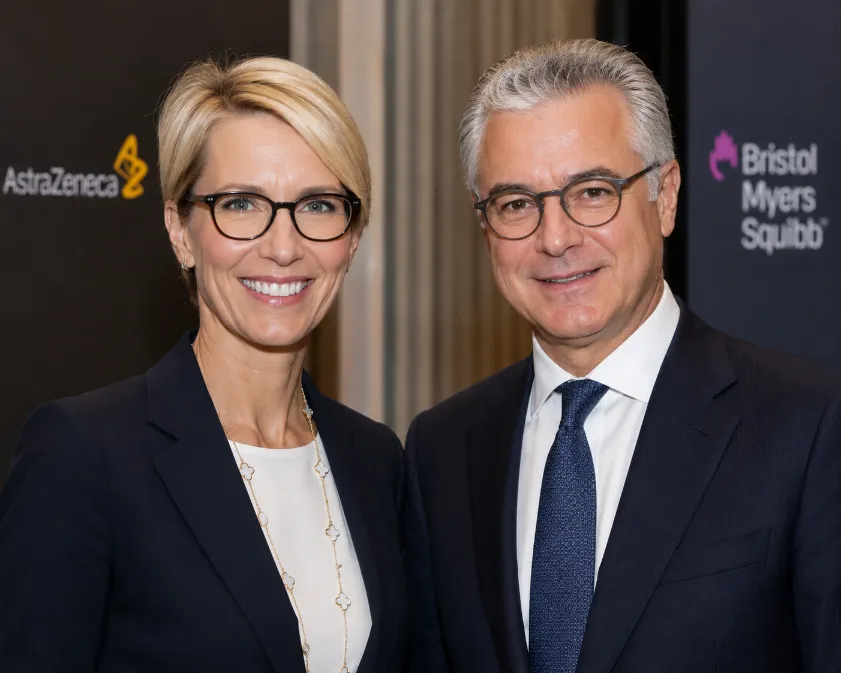
Career Comparison: Emma Walmsley vs. Giovanni Caforio
The professional journeys of these two executives demonstrate two different routes to pharmaceutical leadership.
| Category | Emma Walmsley | Giovanni Caforio |
|---|---|---|
| Professional Foundation | Marketing and general management | Medicine and pharmaceuticals |
| Major Leadership Role | GSK CEO | Bristol Myers Squibb CEO |
| Industry Perspective | Business and consumer healthcare | Medical and biopharmaceutical |
| Major Strategic Focus | Portfolio transformation | Pharmaceutical expansion |
| Major Corporate Event | Consumer Healthcare demerger | Celgene acquisition |
| Leadership Challenge | Reshaping GSK’s business | Integrating a major acquisition |
| Key Therapeutic Focus | Vaccines and specialty medicines | Oncology and innovative medicines |
| Career Style | Strategic and transformational | Scientific and growth-oriented |
The contrast is particularly interesting because Walmsley and Caforio arrived at senior pharmaceutical leadership through different professional routes. Walmsley’s background in consumer businesses helped shape her approach to corporate strategy and portfolio management. Caforio’s medical training, meanwhile, was closely connected to the scientific and clinical environment of biopharmaceutical development.
Neither path is inherently better. The pharmaceutical industry requires leaders who can understand science, regulation, commercial strategy, capital allocation, and global operations simultaneously.
Emma Walmsley’s Leadership at GSK
Walmsley’s tenure at GSK was characterized by an effort to reshape the company’s portfolio and sharpen its strategic focus.
Some of the most important areas associated with her leadership include:
- Separating Consumer Healthcare: GSK’s consumer healthcare operations were separated to create Haleon as an independent company.
- Greater Focus on Biopharmaceuticals: The company increasingly emphasized vaccines and specialty medicines.
- Portfolio Transformation: GSK worked to create a more focused business model.
- Research and Development: Innovation and pipeline development remained central to the company’s strategy.
- Global Scale: Walmsley led GSK during a period of substantial change in the global healthcare market.
The creation of Haleon was particularly significant. GSK explained that the separation was intended to create two more focused companies, allowing GSK to concentrate on biopharmaceuticals while Haleon focused exclusively on consumer healthcare. The demerger was completed in July 2022.
Her leadership also coincided with an increased emphasis on vaccines and specialty medicines. GSK later credited Walmsley with delivering a significant change in the company’s operating performance, portfolio, and pipeline before announcing her departure as CEO.
Giovanni Caforio’s Leadership at Bristol Myers Squibb
Caforio’s leadership story is closely connected to the expansion of Bristol Myers Squibb into a broader biopharmaceutical organization.
His leadership included several important priorities:
- Expansion of the Innovative Medicines Portfolio
- Strengthening Oncology
- Growth in Immunology and Inflammation
- Expansion of Hematology and Cardiovascular Medicine
- Large-Scale Mergers and Acquisitions
- Investment in Research and Development
The acquisition of Celgene became a defining event of his tenure. BMS completed the transaction in November 2019, with Celgene becoming a wholly owned subsidiary. The combination gave BMS a significantly broader portfolio and expanded its presence across major therapeutic areas.
The transaction also created the challenge of integrating two major organizations. Such deals can provide access to promising medicines and technologies, but they also require careful management of employees, operations, finances, research programs, and corporate culture.
Caforio’s 2020 CEO letter highlighted the company’s new position as a diversified biopharmaceutical organization with leading medicines across oncology, hematology, immunology, and cardiovascular areas.
Major Achievements of Emma Walmsley
Walmsley’s professional legacy can be viewed through the strategic changes she helped lead at GSK.
Notable achievements include:
- Becoming the first woman to serve as GSK’s CEO.
- Leading the company through a major corporate transformation.
- Overseeing the separation of the Consumer Healthcare business into Haleon.
- Strengthening the company’s focus on vaccines and specialty medicines.
- Guiding GSK through major changes in its pharmaceutical portfolio.
- Leading a global healthcare organization through significant market and operational challenges.
Her leadership is especially notable because corporate transformations of this scale require decisions that can affect a company for many years. The GSK-Haleon separation changed the structure of both businesses and allowed each to pursue a more focused strategy.
Major Achievements of Giovanni Caforio
Caforio’s legacy is closely connected to BMS’s expansion and the development of a broader innovative medicines business.
Important areas of his leadership include:
- Leading Bristol Myers Squibb as CEO from 2015.
- Serving as chairman and CEO during the Celgene transaction.
- Expanding the company’s presence in oncology.
- Supporting growth in hematology and immunology.
- Strengthening the company’s pharmaceutical pipeline.
- Guiding BMS through a major corporate integration.
The Celgene acquisition stands out as the most visible strategic transaction associated with his tenure. BMS presented the combination as a way to create a leading biopharmaceutical company with a broader portfolio and pipeline.
Leadership Styles and Strategic Differences
The careers of Emma Walmsley and Giovanni Caforio reveal different approaches to leading large healthcare companies.
Walmsley’s leadership can be associated with corporate transformation and strategic focus. Her time at GSK involved deciding which parts of the business should remain within the company and which should operate independently. The separation of Consumer Healthcare was a major example of this approach.
Caforio’s leadership, by contrast, was strongly associated with growth through pharmaceutical innovation and strategic acquisition. The Celgene transaction was a major example of how BMS expanded its portfolio and strengthened its position in key therapeutic areas.
The differences can be summarized as follows:
| Leadership Dimension | Walmsley | Caforio |
|---|---|---|
| Primary Challenge | Transforming an established healthcare company | Expanding and integrating a major biopharma business |
| Strategic Approach | Portfolio focus and restructuring | Acquisition and portfolio expansion |
| Background | Business and consumer healthcare | Medicine and pharmaceuticals |
| Major Corporate Milestone | Haleon demerger | Celgene acquisition |
| Industry Contribution | Reshaping GSK’s strategic direction | Expanding BMS’s innovative medicines platform |
These differences should not be interpreted as absolute descriptions of their personalities. Instead, they reflect the business environments and strategic decisions associated with their executive careers.
Challenges Faced by Both Executives
Leading a global pharmaceutical company involves much more than managing sales. CEOs must deal with scientific uncertainty, regulatory requirements, research costs, patent cycles, competition, and changing healthcare policies.
Challenges associated with Walmsley’s tenure included:
- Transforming a large and complex organization.
- Managing the separation of the consumer healthcare business.
- Building a stronger specialty-medicines portfolio.
- Maintaining investment in research and development.
- Competing in highly competitive global pharmaceutical markets.
Challenges associated with Caforio’s leadership included:
- Managing a large-scale acquisition.
- Integrating Celgene into BMS.
- Maintaining innovation after a major corporate transaction.
- Managing a diverse pharmaceutical portfolio.
- Balancing investment in research with financial performance.
The two executives therefore faced different versions of a common problem: how to build a sustainable pharmaceutical company while responding to constant changes in science, regulation, competition, and healthcare demand.
Their Impact on the Pharmaceutical Industry
The broader significance of these careers extends beyond GSK and Bristol Myers Squibb.
Modern pharmaceutical leadership increasingly involves a combination of:
- Scientific innovation
- Global commercial strategy
- Research and development
- Corporate acquisitions
- Portfolio management
- Regulatory expertise
- Financial discipline
Walmsley’s career demonstrates how a leader with a strong consumer and business background can take charge of a major biopharmaceutical company and oversee a substantial corporate transformation.
Caforio’s career illustrates how medical expertise can be combined with executive leadership to guide a global pharmaceutical company through innovation, expansion, and major strategic transactions.
Their careers also highlight two major trends in the pharmaceutical industry: specialization and consolidation. Companies are increasingly focused on high-value therapeutic areas while also using mergers and acquisitions to strengthen their pipelines and market positions.
Key Similarities Between the Two Executives
Despite their differences, both leaders share several important characteristics.
- Both led major international healthcare companies.
- Both operated in highly regulated industries.
- Both were responsible for large global workforces.
- Both had to balance innovation with financial performance.
- Both were involved in significant strategic changes.
- Both focused heavily on long-term pharmaceutical growth.
- Both operated during periods of rapid change in healthcare and biotechnology.
Their careers demonstrate that successful pharmaceutical leadership requires the ability to make difficult decisions while maintaining a long-term perspective.
Key Differences Between Their Careers
The most important differences include:
- Educational background: Caforio has a medical background, while Walmsley studied Classics and Modern Languages at Oxford.
- Career development: Walmsley developed extensive experience in marketing and general management before becoming a pharmaceutical CEO.
- Scientific orientation: Caforio’s medical training gave his career a stronger clinical and scientific foundation.
- Corporate strategy: Walmsley’s tenure at GSK was strongly linked to business transformation and restructuring.
- M&A strategy: Caforio’s leadership was strongly associated with the Celgene acquisition and the resulting integration.
- Industry focus: Both worked in healthcare, but their companies operated with different portfolios and strategic priorities.
These distinctions make their careers useful examples of how there is no single route to the top of the pharmaceutical industry.
Current Status and Professional Legacy
As of 2026, Walmsley is no longer GSK’s CEO. GSK announced that she stepped down from the CEO role on December 31, 2025, with Luke Miels assuming the position on January 1, 2026. GSK’s announcement also stated that Walmsley would remain an employee through September 30, 2026, to support the transition. (GSK)
Caforio’s most significant executive legacy remains tied to his leadership of Bristol Myers Squibb and the company’s transformation during his tenure, particularly the Celgene acquisition and the expansion of the company’s innovative medicines portfolio. His career stands out for combining medical expertise with senior-level pharmaceutical management.
Together, their professional stories show two different approaches to leadership in global healthcare: one centered heavily on corporate transformation and strategic focus, and the other on pharmaceutical expansion, innovation, and major acquisitions.
Emma Walmsley and Giovanni Caforio: Who Had the Greater Impact?
Determining which executive had the greater impact depends on the criteria being used.
| Measure | Walmsley | Caforio |
|---|---|---|
| Corporate Transformation | Major | Significant |
| Strategic Restructuring | Very Significant | Moderate |
| Major Acquisition Leadership | Significant | Very Significant |
| Pharmaceutical Innovation | Strong | Strong |
| Portfolio Development | Strong | Very Strong |
| Industry Influence | High | High |
| Distinctive Legacy | GSK transformation | BMS expansion and Celgene integration |
Walmsley’s strongest contribution was the transformation of GSK’s business structure and strategic direction. The creation of Haleon marked a major change in the company’s history and helped establish a more focused biopharmaceutical GSK.
Caforio’s strongest contribution was the expansion and transformation of BMS through strategic growth and the Celgene acquisition. The deal significantly changed the scale and composition of the company.
Rather than identifying one as universally more successful, it is more accurate to say that their leadership legacies are different. Walmsley is particularly associated with strategic transformation, while Caforio is strongly associated with pharmaceutical expansion and large-scale corporate integration.
The careers of these two executives offer a valuable comparison of modern pharmaceutical leadership. Walmsley’s journey from consumer and marketing management to the CEO position at GSK demonstrates how business strategy and corporate transformation can reshape a major healthcare company. Caforio’s path from medicine into pharmaceutical leadership shows how scientific expertise can combine with executive decision-making to guide a global biopharmaceutical organization.
Their most important achievements also reflect different strategic priorities. Walmsley’s leadership was closely connected with GSK’s transformation and the creation of a more focused biopharmaceutical business, while Caforio’s tenure at BMS was defined in part by expansion, innovative medicines, and the major Celgene acquisition. Both careers demonstrate the complexity of leading companies that operate at the intersection of science, healthcare, business, and global regulation.
Who is Emma Walmsley?
Emma Walmsley is a British business executive best known for serving as CEO of GSK. She joined GSK in 2010 after a long career at L’Oréal and became GSK’s CEO in 2017. She stepped down from the CEO role at the end of 2025.
Who is Giovanni Caforio?
Giovanni Caforio, M.D., is a physician and pharmaceutical executive who served as CEO and chairman of Bristol Myers Squibb. He became CEO in 2015 and played a major role in the company’s strategic expansion, including the acquisition of Celgene.
What is Emma Walmsley best known for?
Walmsley is particularly known for leading GSK through a major transformation that included the separation of its Consumer Healthcare business to form Haleon and a stronger focus on vaccines and specialty medicines.
What is Giovanni Caforio best known for?
Caforio is best known for his leadership of Bristol Myers Squibb and his role in the company’s acquisition of Celgene, which significantly expanded BMS’s portfolio and strengthened its position as a major biopharmaceutical company.
Did Emma Walmsley and Giovanni Caforio lead the same company?
No. Walmsley led GSK, while Caforio led Bristol Myers Squibb. Their careers are connected through the broader pharmaceutical and healthcare industry rather than through leadership of the same company.
What are the biggest differences between their careers?
Walmsley developed her career through marketing, consumer healthcare, and general management, while Caforio came from a medical and pharmaceutical background. Their major strategic legacies also differ, with Walmsley associated with GSK’s transformation and Caforio with BMS’s expansion and Celgene integration.
Who had the more influential pharmaceutical career?
Both had influential careers, but their impact came in different forms. Walmsley played a major role in reshaping GSK, while Caforio helped expand Bristol Myers Squibb through pharmaceutical innovation and a major acquisition. The better comparison depends on whether the focus is transformation, innovation, or M&A leadership.